Lewisham Council rules for bulky rubbish collection
Posted on 22/05/2026
Lewisham Council rules for bulky rubbish collection: what you need to know before you book
If you've got a sofa blocking the hallway, a mattress leaning against the wall, or a broken wardrobe that has been sitting in the spare room for far too long, bulky waste can go from "I'll deal with it later" to "I need this gone now" pretty quickly. The good news is that the Lewisham Council rules for bulky rubbish collection are fairly straightforward once you understand how the system works. The slightly annoying bit? Miss one small detail, and your collection can be delayed, refused, or left sitting neatly on the kerb while you're at work. Not ideal.
This guide breaks everything down in plain English. You'll find out what counts as bulky rubbish, how Lewisham's collection rules typically work, what to prepare before booking, which mistakes cause problems, and when a private clearance service may make more sense. Along the way, we'll also point you to helpful local resources, including house clearance support, office clearance options, and our Lewisham service area page for residents and businesses looking for more local help.
Truth be told, most bulky waste issues are not about the rubbish itself. They're about timing, access, and knowing the council's expectations before the collection date arrives. Sort those out early and everything gets much easier.
Below, you'll also find a simple checklist, a comparison table, practical examples, and a proper FAQ section for the questions people actually ask.
Why Lewisham Council rules for bulky rubbish collection Matters
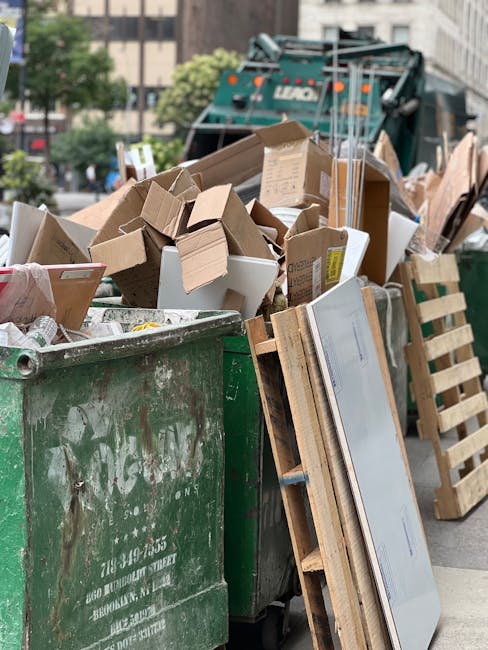
Bulky waste is one of those household jobs that looks simple until you actually have to do it. A table, a sofa, a fridge, a broken bed base, a stack of damaged shelving - these items are awkward, heavy, and often impossible to fit into normal bin collections. That's why councils such as Lewisham set out specific bulky rubbish collection rules: they need a controlled system that keeps streets tidy, protects workers, avoids fly-tipping, and makes sure waste is handled safely.
For residents, the rules matter for a more practical reason: they help you avoid wasted effort. If an item is not accepted, not prepared correctly, or placed in the wrong spot, it may not be collected. You're left with the same clutter, only now it's on a deadline. And nobody wants to wrestle a wardrobe out to the pavement twice.
The wider issue is neighbourhood impact. When bulky waste is left beside bins or dumped in alleyways, it can attract vermin, block access, and make an area look neglected very quickly. In London, where space is tight and shared spaces matter, that can become a real nuisance for everyone on the street. If you're dealing with recurring waste problems, a more structured option such as professional rubbish removal can sometimes reduce the back-and-forth.
There's also a financial angle. Councils often charge for bulky collections, and those charges are normally lower than hiring a skip for small loads. On the other hand, if you have lots of mixed waste, repeated furniture items, or access constraints, the council option may stop being the most efficient choice. That's where a little comparison goes a long way.
Expert takeaway: The rules are there to keep the collection safe, fair, and workable. If you understand the process before booking, you usually save time, avoid refusal, and get the job done with far less stress.
How Lewisham Council rules for bulky rubbish collection Works
In most cases, the council bulky waste process is designed for larger household items that won't fit in normal bins or bags. The exact items accepted, service limits, and booking conditions can change, so always check the current Lewisham Council guidance before arranging collection. That said, the overall process tends to follow the same pattern.
Typical process in plain English
- Check what you need to dispose of. Identify the items, their size, and whether they contain anything hazardous or electrical.
- Confirm the council's rules. Make sure your items are accepted and understand any limits on quantity, weight, or item type.
- Book the collection. You usually need to schedule a date in advance rather than putting items out informally.
- Prepare the items. This often means placing them where the collection team can safely access them.
- Put the items out correctly. Follow the timing and location instructions carefully. A missed window can mean a missed collection.
That sounds simple enough, but the practical details matter. For example, a chest of drawers might be accepted, but it may need to be emptied and dismantled first. A fridge could be accepted in principle, but only if the council or collection provider allows electrical items and you've removed personal contents. A bulky item isn't just "big rubbish"; it's waste with handling rules.
In some cases, residents are surprised that certain items do not belong in a standard bulky collection at all. Mattresses, electrical appliances, and mixed construction debris can each have different handling requirements. If you're unsure, ask before booking. That small step can save a lot of grief later on.
If you're managing a property move, a tenant turnover, or an inherited home, it may be useful to read more about end of tenancy clearance or flat clearance services because the type of clearance often changes the best disposal route.
What usually affects whether a collection goes smoothly
- Item type: furniture, mattresses, white goods, and electricals may be treated differently.
- Access: collection crews need to reach the items safely without lifting hazards or obstructions.
- Preparation: some items need disassembly, wrapping, or separate handling.
- Timing: items often need to be placed out by a specific time, not "sometime in the morning".
- Address details: the collection point must match the booking and instructions.
To be fair, that's not unusual. Most local authority services work best when the booking is precise and the waste is presented properly. It's the same logic behind garden waste removal and other scheduled collections: get the basics right, and the service is much easier to use.
Key Benefits and Practical Advantages
Using the council's bulky waste service can be a sensible option if you only have a small amount of large household items and you want a straightforward, official collection route. The main benefit is simplicity. You book, you prepare, the items are taken away. No skip permits, no heavy lifting all day, no wondering where everything should go.
Another practical advantage is compliance. When you use an approved local service, you reduce the risk of fly-tipping problems or accidental improper disposal. That matters more than people think. Once waste is left in the wrong place, it can become your responsibility to explain or even remove it. Nobody wants that call on a rainy Tuesday morning.
Why people choose a council bulky collection
- It can be convenient for a few large items. One sofa, one mattress, or a small cluster of furniture can often be easier through a council route.
- It keeps disposal official. You have a clear collection process rather than guessing where the waste ended up.
- It can suit smaller budgets. For modest clear-outs, council pricing may be more manageable than hiring a skip or private team.
- It reduces the need to transport items yourself. This is especially useful if you don't have a van, or if the items are too awkward to move safely.
That said, "benefit" depends on your situation. If you've got a full garage, several rooms of mixed waste, or a tight deadline before a tenancy ends, a council collection can be too limited. In that case, a more flexible service may save you time and multiple bookings. If you're comparing options, our rubbish removal price guide may help you think through the cost side in a practical way.
One small but important upside: using a proper collection service can also lower stress at home. There's something oddly satisfying about seeing a bulky item finally leave the hallway. The room feels bigger immediately. You notice the light again. Simple thing, but it matters.
Who This Is For and When It Makes Sense
The Lewisham Council rules for bulky rubbish collection are most relevant for residents who have a few large items to dispose of and want to use a local authority route rather than a private clearance company. It suits people who are organised enough to book ahead and can follow the preparation instructions carefully. If that sounds like you, great.
It usually makes sense if you are:
- getting rid of an old sofa, armchair, or bed frame
- replacing furniture after a move
- clearing items from a spare room or loft
- dealing with a one-off household item that is too large for bins
- working on a small landlord or tenant changeover with limited waste
- looking for a lawful disposal option without hiring a full clear-out team
It may also suit households that are cost-sensitive and only have a small number of items. But if you're staring at piles of mixed junk, old appliances, broken shelves, and half a shed's worth of odds and ends, a council collection may feel like trying to empty a bathtub with a teaspoon. Possible? Sometimes. Efficient? Not really.
This is where decision-making helps. Ask yourself: is this a neat, limited bulky waste job, or is it a broader clear-out? If it's the latter, you may want to explore property clearance services or a more comprehensive house clearance rather than piecing together several collections.
When a council collection is probably the wrong fit
- You need same-day removal.
- You have many mixed waste types, including non-household debris.
- The items are especially heavy, awkward, or difficult to access.
- You are clearing an entire property, not just a few items.
- You need help moving items from inside the property, not just from the front boundary.
That last point catches people out quite often. Council-style collections typically depend on set access arrangements. If the items aren't ready in the expected place, the job can fall apart quickly.
Step-by-Step Guidance
If you want the smoothest possible experience, treat the process like a small project rather than a quick chore. A few minutes of planning makes a surprising difference.
Step 1: List the items clearly
Write down exactly what you want removed. Don't just say "old stuff". Be specific: one three-seater sofa, one broken bedside cabinet, two disassembled shelving units, and so on. If something contains a motor, battery, gas, or coolant, flag it separately. Those details matter.
Step 2: Check Lewisham's current acceptance rules
Look at the latest council guidance before you book. Accepted items, charge levels, and collection conditions may change. This is especially important for electricals, mattresses, and anything that may be considered hazardous or difficult to process.
Step 3: Measure the access path
Think like the collection crew for a moment. Can the item pass through hallways, narrow gates, stairwells, or front steps? If you're in a flat, will the item actually make it downstairs without damage or risk? If not, dismantle it first or arrange a different service.
Step 4: Prepare the waste properly
Empty drawers. Remove personal items. Separate loose components. Bag small fittings where possible. If an item needs to be dismantled, do that before collection day unless the service explicitly says otherwise. A half-loose bed frame is a classic problem; one side is balanced, the other is not, and suddenly everyone's playing a game of awkward geometry.
Step 5: Place the items exactly as instructed
Follow the council's instructions on where to leave the waste and when to put it out. If it says "by the front boundary" or "outside the property", don't improvise. Small deviations can lead to missed collection. It sounds fussy, but these rules are there because crews operate on tight routes and need consistency.
Step 6: Keep proof and confirmation
Save your booking confirmation, reference number, and any messages about the collection date. If there's a problem, you'll want a simple paper trail. Not glamorous, I know, but useful.
Step 7: Follow up quickly if anything is missed
If the waste wasn't collected, contact the council or service provider promptly. Note the time, the exact items left behind, and any visible issue such as access blocked by parked cars. Good records help resolve things much faster.
Expert Tips for Better Results
Here's the honest bit: most bulky waste headaches are preventable. A few careful habits make the whole process smoother, and they're the same habits we recommend to people arranging larger clearances.
Pack the booking with precise information
Give clear details about item type, quantity, access, and whether the items are inside or outside. The more specific you are, the less likely the collection is to be refused or delayed. It may feel slightly over the top, but precision saves time.
Remove anything that could cause rejection
If the item contains hazardous materials, sharp edges, fluids, or restricted components, check first. Some items need separate handling. Don't assume "it's only a bit old" makes it acceptable.
Think about neighbours and shared access
In Lewisham, many properties sit on narrow streets, shared forecourts, or close terraced roads. If the items are blocking the pavement, or if a collection lorry would struggle to stop safely, plan ahead. A quick chat with neighbours can prevent conflict. It's a small thing, but very London.
Use disassembly to your advantage
Breaking down a large item into manageable parts can make collection far easier. A flat-pack wardrobe in pieces is much simpler than a whole unit wedged in a hallway. If you need support, a local team that handles furniture disposal can often advise on the best way to prepare it.
Don't leave it to the last minute
Bulky collections are not the best place for last-minute improvisation. Booking early gives you time to sort access, remove contents, and deal with any surprises. And there are always surprises, aren't there?
Keep children and pets away on collection day
It sounds obvious, but collection time is busy and a little chaotic. Doors are open, items are moved, and staff need a clear space. Keeping the area calm and safe helps everyone.

Common Mistakes to Avoid
There are a few mistakes that show up again and again. Luckily, they're easy to avoid once you know them.
- Not checking what counts as bulky waste. Some items are accepted, others are not, and assumptions cause delays.
- Forgetting to empty items. Drawers, cupboards, and fridges should be checked carefully before collection.
- Leaving items in the wrong place. If the crew can't access them, the collection may be missed.
- Booking too little time. If the property needs dismantling or sorting first, do that before the collection date.
- Mixing bulky waste with general rubbish. Different waste streams can require different handling.
- Ignoring access issues. Parked cars, locked gates, and narrow passages are all common snags.
- Assuming one collection will solve everything. For larger clear-outs, one visit may not be enough.
One recurring issue is simple optimism. People think, "I'll just move it out tonight." Then it starts raining, the item is heavier than expected, and one screw has vanished into the carpet. Classic. Plan for the awkward version of the day, not the ideal version.
Another mistake is not checking how bulky waste differs from other local services like recycling collection or general household bins. Those services are not interchangeable, and the council expects waste to be separated appropriately.
Tools, Resources and Recommendations
You do not need fancy equipment for a basic bulky waste booking, but a few practical tools can make the process safer and less frustrating.
Helpful items to have at home
- measuring tape for doors, hallways, and item dimensions
- basic screwdriver or Allen key set for dismantling furniture
- heavy-duty bags or boxes for loose fittings
- gloves for handling rough edges or dusty items
- marker pen and labels if you are separating items
If you're dealing with more than a couple of items, a simple note on your phone can help. List the item, condition, and any access issues. That way, when you speak to the council or a clearance company, you won't be trying to remember whether the old bookcase was 80 cm or 90 cm wide. Small detail, big difference.
Useful service types to compare
- Council bulky collection: best for small, straightforward residential loads.
- Private rubbish removal: useful for faster turnaround or more complex waste.
- House clearance: better for larger, whole-property jobs.
- Furniture disposal: ideal for one-off large household items.
- End of tenancy clearance: useful for landlords, tenants, and letting agents on a tight schedule.
If you need broader support, estate clearance services may also be relevant for larger family property projects where bulky items are just one part of the job.
Law, Compliance, Standards, or Best Practice
Waste disposal in the UK is governed by general legal duties around proper handling and lawful disposal. You do not need to memorise the legislation to book a bulky collection, but you do need to avoid leaving waste in a way that could be considered fly-tipping or improper storage. Councils also set local rules for service access, item acceptance, and presentation of waste.
The safest approach is simple: follow the current council instructions exactly and only place items out when you have a confirmed collection arrangement. If you are using a private provider, make sure they are operating responsibly and can explain where the waste will go. In practice, that means choosing a service that can collect, transport, and dispose of your items legally and transparently.
Best practice also means separating waste sensibly. Furniture, electricals, metals, and general waste may each be handled differently. If an item is reusable, it may be better to donate or pass it on rather than dispose of it. That isn't always possible, of course, but when it is, it's often the more thoughtful option.
For businesses, landlords, and property managers, compliance becomes even more important because mixed waste and commercial quantities can fall outside a standard residential bulky collection. If that's your situation, a tailored commercial rubbish removal route is often the safer fit.
Options, Methods, or Comparison Table
Choosing between a council bulky collection, a private removal service, or a skip depends on the kind of waste you have and how quickly you need it gone. Here's a simple comparison to help you think it through.
| Option | Best for | Pros | Watch-outs |
|---|---|---|---|
| Council bulky collection | A few large household items | Official service, often straightforward, suited to small loads | May have item limits, booking rules, and less flexibility |
| Private rubbish removal | Faster, more flexible collections | Can handle more varied loads and tighter deadlines | Usually costs more than a basic council collection |
| Skip hire | Projects with ongoing waste over time | Handy if you are clearing gradually | Permits, space, and loading responsibility can be issues |
| House clearance | Whole-property or larger declutter jobs | Comprehensive and less physically demanding | May be more than you need for a single sofa or mattress |
The right choice is not always the cheapest one. If you are a few items short of a full clearance, a council route can be very sensible. If your schedule is tight, or if the waste is mixed and bulky, a private team may be the calmer option. Calm matters more than people think, especially when you're trying to clear a home before handing keys back.
Case Study or Real-World Example
A Lewisham resident we'll call "Sarah" had a common problem: an old sofa, a dismantled wardrobe, and a mattress that had been sitting in a bedroom corner for weeks. The plan was to book a council collection and be done with it. Simple enough. But the first attempt nearly went wrong because the wardrobe pieces were still connected by a few loose fittings, and the mattress was too awkward to move cleanly through a narrow hallway.
She paused, measured the hallway properly, removed the fittings, and put the items by the front access point the evening before collection. On the second attempt, everything went smoothly. The crew took the items, the hallway was clear by lunchtime, and the room immediately felt less cramped. That sense of relief is hard to describe until you've had a bulky item out of the way. The whole room seems to breathe again.
The lesson here is not that every collection is complicated. It's that small preparation tasks can decide whether the service is easy or annoying. The actual waste was not the problem. The access and preparation were.
That's why, for larger or more mixed loads, many people decide to use a more flexible service such as loft clearance or garage clearance when they realise the project has grown beyond one neat collection.
Practical Checklist
Use this quick checklist before you book or put anything out. It helps more than you'd think.
- Have I checked the latest Lewisham Council bulky waste rules?
- Do I know exactly which items are being collected?
- Are any items restricted, hazardous, or outside the normal service?
- Have I emptied drawers, cupboards, and appliances?
- Can the items be safely moved to the agreed collection point?
- Do I need to dismantle anything first?
- Have I removed loose fittings, glass, or sharp parts where relevant?
- Do I have my booking reference and collection date saved?
- Is the access route clear of parked cars, bins, or obstacles?
- Would a private clearance service be a better fit for this job?
If you can tick most of those boxes, you're in good shape. If not, pause and sort the weak spot first. A little prep now can save a second round of effort later on.
Conclusion
Lewisham Council rules for bulky rubbish collection are there to make large-item disposal safer, fairer, and more manageable for everyone. Once you understand what counts as bulky waste, how booking works, and how to prepare the items properly, the process becomes a lot less stressful. For a simple one-off item, the council route can be a practical choice. For bigger, messier, or more time-sensitive jobs, a private clearance solution may be the better answer.
The key is to match the method to the job. That sounds obvious, but it's where many people go wrong. Check the rules, measure the access, prepare the items, and keep the booking details close at hand. Do that, and you give yourself the best chance of a smooth collection.
Get a free quote today and see how much you can save.
And if you're still weighing things up, take a breath. Clearing bulky waste is rarely anyone's favourite task, but with the right plan it becomes one of those small wins that makes the whole home feel lighter.